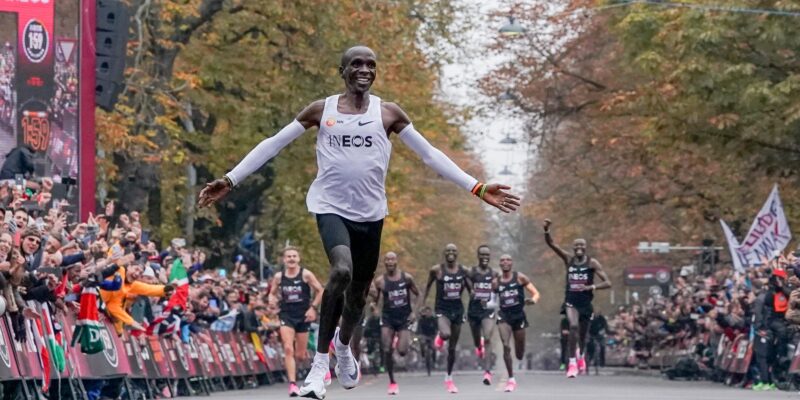


The Power of Self Care
Learning Objectives
- Reflect on and learn ways to look after your wellbeing
- Identify how you can help yourself
- Develop your emotional vocabulary
With the aim of supporting pupils physical and mental health, with INEOS Hygienics we’ve devised self care lesson plan designed for use in KS3 form times and beyond. You can pick and mix from the 5 STEM and PSHE challenges below – or do them all!
Lesson Description
We appreciate that teaching students the power of self-care to support physical and mental wellbeing is hugely important as it’s a practice that should be undertaken by people of all ages – not just those in secondary school. Developed in partnership with INEOS Hygienics – as a part of our new ‘Go Humans Academy’ – we have created a self care lesson plan aimed for all pupils aged between 11 and 16.
Our masterclass, led by psychologist and brain health expert Kimberley Wilson is broken down into five sessions. These video sessions can be viewed below and can form a crucial part of your self care lesson plan.
The Power of Self Care will help empowers pupils to support their own physical and mental wellbeing as well as answer the questions;
- What are brain-activating foods?
- How does sleep impact our brain function levels?
- What is gut-mind connection?
- How can we expand our emotional vocabulary?
How to use our self care lesson plan:
Play the videos on their own or use the PowerPoint, which is packed with information and insights to support discussions around meaningful physical and mental wellbeing. Don’t forget to look at the PowerPoint notes to explore the topics in more detail.

Share


For immediate access to all of our free Key stage 3 and 4 STEM teaching resources.
 1.Form time resource
Use this masterclass's PowerPoint to explore the topics and play the corresponding videos.
 2.Brain food
Kimberley takes a look at some of the best brain-activating foods to help keep you energised and engaged.
 3.Sleep
Kimberley talks about sleep and how it can impact brain health.
 4.Whole Body Mental Health
Kimberley explains that mental and physical wellbeing are often two sides of the same coin, and we need to look after both to take proper care of our health.
 5.Emotions in the Body
Kimberley talks about emotions and the physical impact they have on our body.
 6.Emotional Granularity
Kimberley explains that the bigger our emotional vocabulary is, the more coping skills we have to be able to deal with life and whatever comes our way.
 7.Teaching overview
Look at the 5 core topics this masterclass covers and pick and mix from the mini challenges.
 8.Student log
If time allows, students can capture key take outs on this sheet.
Related Resources
Sustainable Motor Sports
Your classroom just got a pit crew. 🏁
Designed for KS3 Physics, science teachers, DT teachers. We’ve partnered with the National Motor Museum to ask one big question: can motorsport help create a more sustainable future for transport?
Spoiler: yes. And your students are about to find out why.
Four FREE challenges for KS3 — built around the real science behind electric racing, lightweight materials and clean energy innovation.
Students build. Test. Debate. Go again.
Because the engineers solving tomorrow’s transport problems are sitting in classrooms today. Maybe yours.
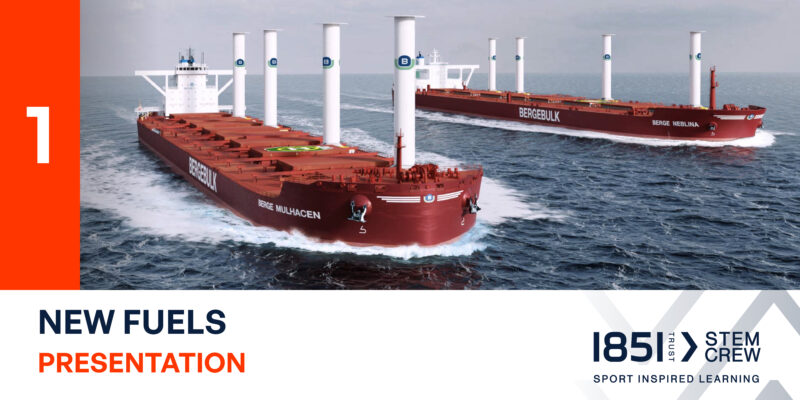
New Fuels
Students will explore the exciting world of New Fuels through a real-life context inspired by Berge Bulk ships and the world of sports, in a three-lesson (3 hours of teaching) PowerPoint series rigorously aligned with the national curriculum.
Diversity, Equality and Inclusion – Workshop 3
Students will embark on an engaging exploration of Diversity, Equality, and Inclusion (DEI) through the inspiring world of SailGP. Using real-world examples from elite athletes and change-makers in the sport, students will investigate the impact of stereotypes, the significance of the Equality Act, and the role they can play in fostering an inclusive environment. Through interactive activities and thought-provoking discussions, they will develop critical thinking and communication skills while reflecting on how diversity and inclusion shape our communities. These dynamic sessions empower students to become active participants in creating a more equitable and inclusive society.

Diversity, Equality and Inclusion – Workshop 2
Students will embark on an engaging exploration of Diversity, Equality, and Inclusion (DEI) through the inspiring world of SailGP. Using real-world examples from elite athletes and change-makers in the sport, students will investigate the impact of stereotypes, the significance of the Equality Act, and the role they can play in fostering an inclusive environment. Through interactive activities and thought-provoking discussions, they will develop critical thinking and communication skills while reflecting on how diversity and inclusion shape our communities. These dynamic sessions empower students to become active participants in creating a more equitable and inclusive society.

Diversity, Equality and Inclusion – Workshop 1
Students will embark on an engaging exploration of Diversity, Equality, and Inclusion (DEI) through the inspiring world of SailGP. Using real-world examples from elite athletes and change-makers in the sport, students will investigate the impact of stereotypes, the significance of the Equality Act, and the role they can play in fostering an inclusive environment. Through interactive activities and thought-provoking discussions, they will develop critical thinking and communication skills while reflecting on how diversity and inclusion shape our communities. These dynamic sessions empower students to become active participants in creating a more equitable and inclusive society.
Renewables 11-18
In this lesson, pupils will learn about renewable energy sources using the exciting context of Sail GP. The lesson will teach pupils to evaluate different sources of renewable and clean energy.
They will learn how renewable energy is implemented in a real-world scenario, using a case study of the Low Carbon installation at the team base of the Emirates GBR Sail GP sailing team. Pupils will be challenged to use their knowledge to plan their own renewable installation at various locations around the world.
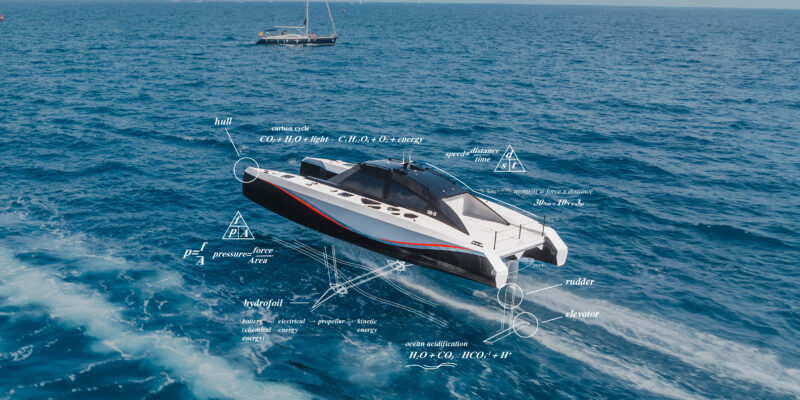
HYDROGEN CHASE BOAT
Discover how the British America’s Cup team is using Hydrogen to power their chase boat, eliminating harmful emissions and driving innovation in the marine industry to design and develop Hydrogen as a clean energy source for their industry.
Renewables 8-11
Key Stage 2 and 3 – teaches pupils about topics such as climate change, use of natural resources and the impact of human actions on the environment in the science programmes of study.
This includes study of renewable and non-renewable energy sources in physics and the efficacy of recycling in chemistry. This enables students to study topics that will support their understanding of energy resources, including the impact of technology on developing sustainable sources of energy.
These resources consist of a teacher Powerpoint slide deck, with notes embedded in the slides. There are printable activity sheets comprising of:
•Event map
•Renewable energy information posters
•Event Location Cards
•Renewable energy choices worksheet
In addition there are video links embedded within the slides to bring this topic to life.
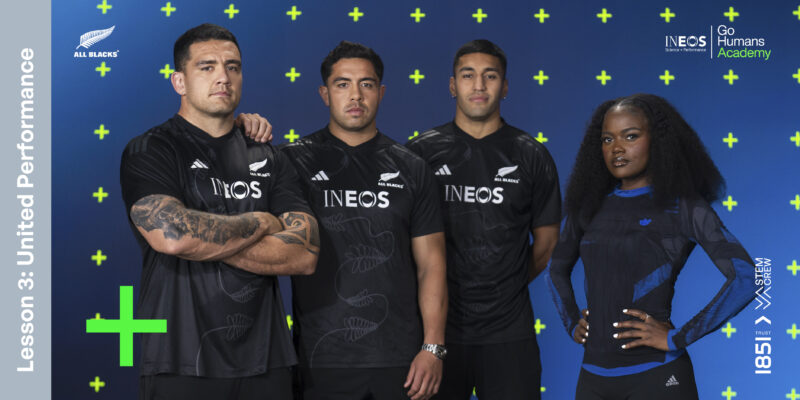
The Power of Movement
Phase III of the INEOS Go Humans Academy ushers in a dynamic blend of athleticism and artistry, focusing on the raw energy of the New Zealand All Blacks and the kinetic power of dance led by renowned choreographer Sherrie Silver.
This series, titled “The Power of Movement” is designed to demonstrate how intentional movement can bridge the gap between mental resilience and optimised performance. Throughout this engaging five-minute masterclass series, participants will discover how to transform challenges into victories, merging the rigour of sport with the rhythm of dance to supercharge mental and physical wellbeing. Above all, this is an opportunity to hear from athletes at the top of their game and to gain some insight into what it takes to be the best.





Heart Rate And Recovery – Biology Learning Resources
In this Biology resource we use the England Women’s football team to build understanding of heart rate and recovery, and why it is important in sport. Students will use practical activities to test their knowledge of their own heart rate and the time it takes for it to return to resting/normal following exercise. Watch the short starter film to kick off your lesson and hear from England player Jess Carter, and some of the England support team, about the team’s training regime.
Calculating The Power of The Wind
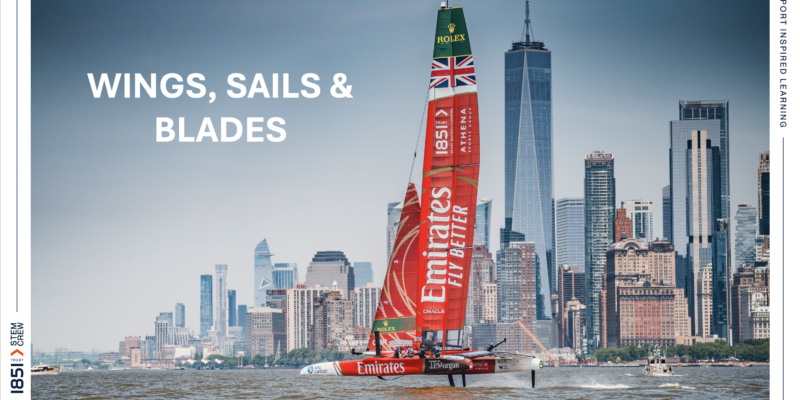
Explore the concept of power using the context of the super-fast SailGP GBR catamaran and the cutting-edge technology of wind turbines. Students will have the chance to build a working model wind turbine and use their new knowledge of calculating power to build the most efficient design. There is also the chance to find out from SailGP GBR sailors and wind industry experts about their fields and careers. The sustainable recycling process of wind turbines is also considered giving students the opportunity to come up with their own solutions.



Viruses
.