


Vaccinations
Learning Objectives
- Describe what a vaccine is.
- Explain how a vaccine works.
- Explain how immunity through vaccination can lead to a return to sport for all. (Herd Immunity)
Lesson Description
In this, the forth of four curriculum linked Biology lessons covering infection and response and vaccinations, using the context of professional sports, we look at how the vaccines work and explore how they work.

Share


For immediate access to all of our free Key stage 3 and 4 STEM teaching resources.
 1.Biology: Vaccinations
Lesson 4 in the ZERO Days programme.
1.Biology: Vaccinations
Lesson 4 in the ZERO Days programme.
Related Resources
Sustainable Motor Sports
Your classroom just got a pit crew. 🏁
Designed for KS3 Physics, science teachers, DT teachers. We’ve partnered with the National Motor Museum to ask one big question: can motorsport help create a more sustainable future for transport?
Spoiler: yes. And your students are about to find out why.
Four FREE challenges for KS3 — built around the real science behind electric racing, lightweight materials and clean energy innovation.
Students build. Test. Debate. Go again.
Because the engineers solving tomorrow’s transport problems are sitting in classrooms today. Maybe yours.
New Fuels
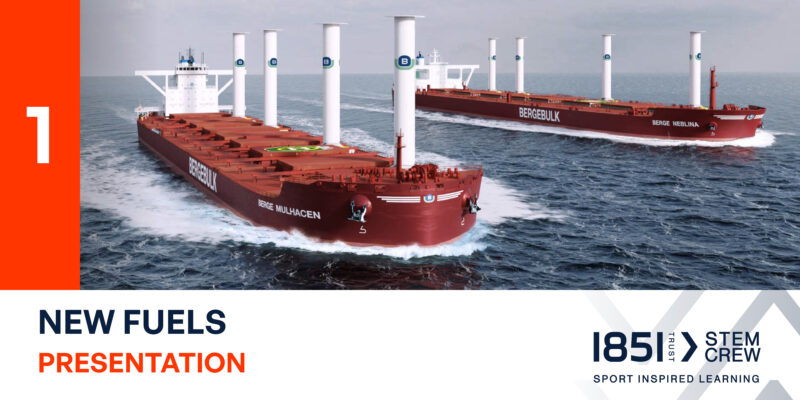
Students will explore the exciting world of New Fuels through a real-life context inspired by Berge Bulk ships and the world of sports, in a three-lesson (3 hours of teaching) PowerPoint series rigorously aligned with the national curriculum.




Heart Rate And Recovery – Biology Learning Resources
In this Biology resource we use the England Women’s football team to build understanding of heart rate and recovery, and why it is important in sport. Students will use practical activities to test their knowledge of their own heart rate and the time it takes for it to return to resting/normal following exercise. Watch the short starter film to kick off your lesson and hear from England player Jess Carter, and some of the England support team, about the team’s training regime.
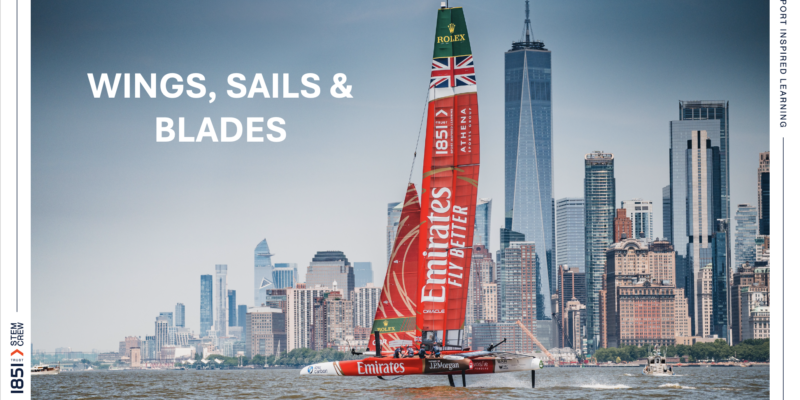
Calculating The Power of The Wind
Explore the concept of power using the context of the super-fast SailGP GBR catamaran and the cutting-edge technology of wind turbines. Students will have the chance to build a working model wind turbine and use their new knowledge of calculating power to build the most efficient design. There is also the chance to find out from SailGP GBR sailors and wind industry experts about their fields and careers. The sustainable recycling process of wind turbines is also considered giving students the opportunity to come up with their own solutions.



Bearings
.


Viruses
.



Code for the Cup
Can your students cross the start line without jumping the gun?
That’s the challenge at the heart of this three-lesson Computing unit — and it’s a real one. Using the high-stakes drama of an America’s Cup race start as the hook, students code a foiling race boat to hit the start line as close to the gun as possible. Too early? Penalty. Too late? Race lost.
It’s tense. It’s competitive. It’s secretly brilliant for teaching code.
Across the three lessons, students will:
Break a real-world problem into logical steps (hello, computational thinking)
Sequence code blocks to build a working programme
Test, debug, and refine — because “good enough” doesn’t win races
What you get: Three fully editable lesson presentations with teacher notes, ready-to-go guidance for deeper exploration, and a Google Classroom link to share everything with students in seconds.
No sailing experience required. Competitive spirit: optional but encouraged.


