


Efficiencies and energy changes
Learning Objectives
-
I can calculate the efficiency of an energy change
-
I can describe how energy is dissipated.
Lesson Description
In this resource, students will investigate the question ‘how can a huge bulk carrier move thousands of tonnes while making the best use of its energy?’. Pupils will investigate energy transfer, dissipation and the efficiency equation.

Share


For immediate access to all of our free Key stage 3 and 4 STEM teaching resources.
 1.Video: Materials and their uses
Explore how engineers make vessels use energy more efficiently. From hydrofoiling America’s Cup boats to giant cargo ships, students discover how reducing drag and wasted energy drives real-world design.
 2.Lesson Presentation : Efficiencies and energy changes
Physics
Key Stage 3 & Key Stage 4
Related Resources

Sustainable Motor Sports
Your classroom just got a pit crew. 🏁
Designed for KS3 Physics, science teachers, DT teachers. We’ve partnered with the National Motor Museum to ask one big question: can motorsport help create a more sustainable future for transport?
Spoiler: yes. And your students are about to find out why.
Four FREE challenges for KS3 — built around the real science behind electric racing, lightweight materials and clean energy innovation.
Students build. Test. Debate. Go again.
Because the engineers solving tomorrow’s transport problems are sitting in classrooms today. Maybe yours.
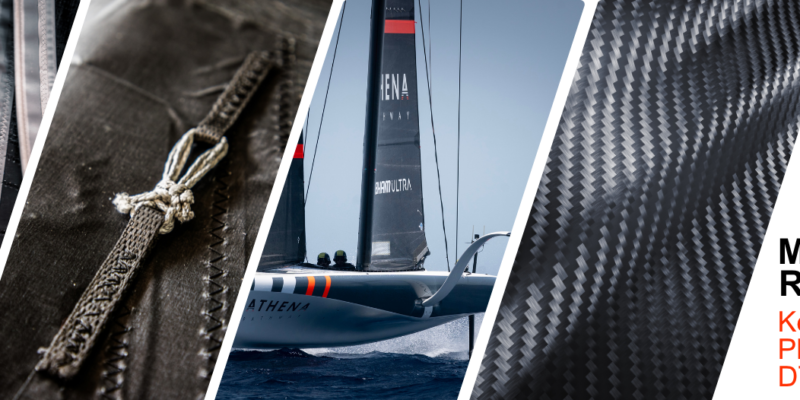
Materials – Practical Investigation
This isn’t a materials lesson. This is your students in the design room of an America’s Cup team — examining the real materials used on a race boat, making the same decisions real engineers make, then building and testing their own design under race conditions.
Carbon fibre chosen for its strength-to-weight ratio. Dyneema selected because saltwater won’t destroy it. Aluminium honeycomb because a solid sheet would never leave the dock. Every decision backed by science. Every choice a lesson in engineering thinking.
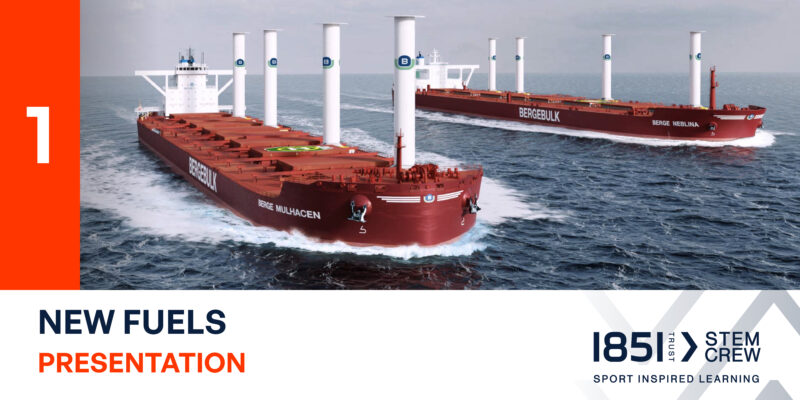
New Fuels
Students will explore the exciting world of New Fuels through a real-life context inspired by Berge Bulk ships and the world of sports, in a three-lesson (3 hours of teaching) PowerPoint series rigorously aligned with the national curriculum.
Renewables 11-18
In this lesson, pupils will learn about renewable energy sources using the exciting context of Sail GP. The lesson will teach pupils to evaluate different sources of renewable and clean energy.
They will learn how renewable energy is implemented in a real-world scenario, using a case study of the Low Carbon installation at the team base of the Emirates GBR Sail GP sailing team. Pupils will be challenged to use their knowledge to plan their own renewable installation at various locations around the world.

Investigating forces
This resource integrates physics and engineering principles, bringing real-world maritime challenges into the classroom, making it perfect for STEM students interested in design, technology, and physics!
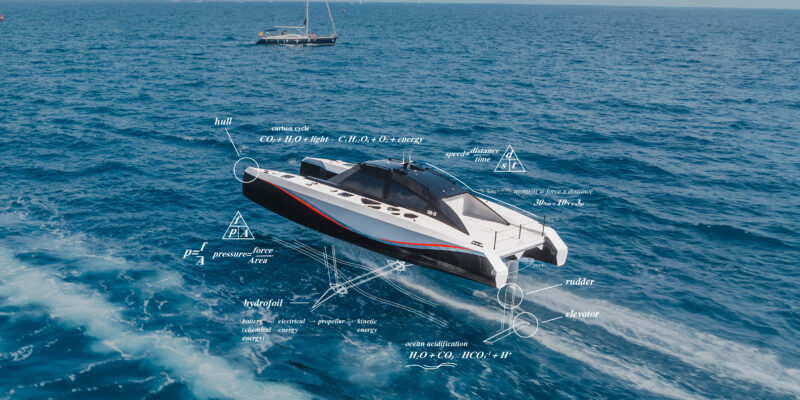
HYDROGEN CHASE BOAT
Discover how the British America’s Cup team is using Hydrogen to power their chase boat, eliminating harmful emissions and driving innovation in the marine industry to design and develop Hydrogen as a clean energy source for their industry.
Renewables 8-11
Key Stage 2 and 3 – teaches pupils about topics such as climate change, use of natural resources and the impact of human actions on the environment in the science programmes of study.
This includes study of renewable and non-renewable energy sources in physics and the efficacy of recycling in chemistry. This enables students to study topics that will support their understanding of energy resources, including the impact of technology on developing sustainable sources of energy.
These resources consist of a teacher Powerpoint slide deck, with notes embedded in the slides. There are printable activity sheets comprising of:
•Event map
•Renewable energy information posters
•Event Location Cards
•Renewable energy choices worksheet
In addition there are video links embedded within the slides to bring this topic to life.

Calculating The Power of The Wind
Explore the concept of power using the context of the super-fast SailGP GBR catamaran and the cutting-edge technology of wind turbines. Students will have the chance to build a working model wind turbine and use their new knowledge of calculating power to build the most efficient design. There is also the chance to find out from SailGP GBR sailors and wind industry experts about their fields and careers. The sustainable recycling process of wind turbines is also considered giving students the opportunity to come up with their own solutions.


