


Linear and Circular Economies
Learning Objectives
- To know the difference between a linear economy and a circular economy
- To identify linear and circular economies
- To state examples of linear and circular economies
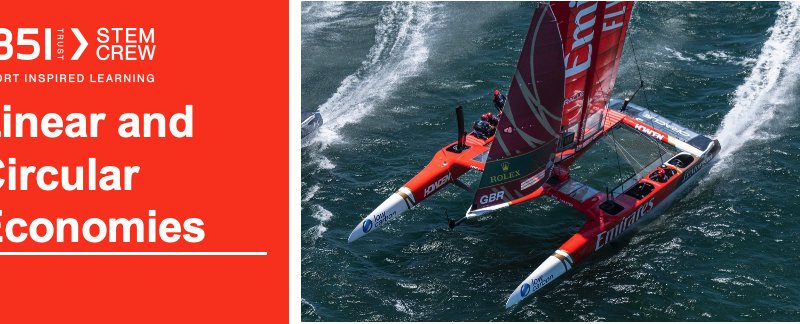
- To use Emirates GBR SailGP Team as a worked example to demonstrate the circular economy
Lesson Description
How does Emirates GBR SailGP Team work to a circular economy model and why is it important?
This hands-on lesson uses Emirates GBR SailGP Team as a real-world case study to bring the circular economy to life. Students explore the difference between linear and circular systems, investigate how a world-class sailing team is rethinking waste from kit to equipment, and design their own Circular Economy Action Plan as sustainability managers for the team.
Packed with discussion tasks, a real industry case study, and a creative group challenge — no textbook required.

Share


For immediate access to all of our free Key stage 3 and 4 STEM teaching resources.
 1.Linear and Circular Economies
What happens to the things we throw away — and what if nothing had to be wasted at all? This hands-on lesson uses Emirates GBR SailGP Team as a real-world case study to bring the circular economy to life. Students explore the difference between linear and circular systems, investigate how a world-class sailing team is rethinking waste from kit to equipment, and design their own Circular Economy Action Plan as sustainability managers for the team. Packed with discussion tasks, a real industry case study, and a creative group challenge — no textbook required.
1.Linear and Circular Economies
What happens to the things we throw away — and what if nothing had to be wasted at all? This hands-on lesson uses Emirates GBR SailGP Team as a real-world case study to bring the circular economy to life. Students explore the difference between linear and circular systems, investigate how a world-class sailing team is rethinking waste from kit to equipment, and design their own Circular Economy Action Plan as sustainability managers for the team. Packed with discussion tasks, a real industry case study, and a creative group challenge — no textbook required.
Age Range:
11-14
(Key Stage 3)
Subject:
DT
Related Resources
Materials – Practical Investigation
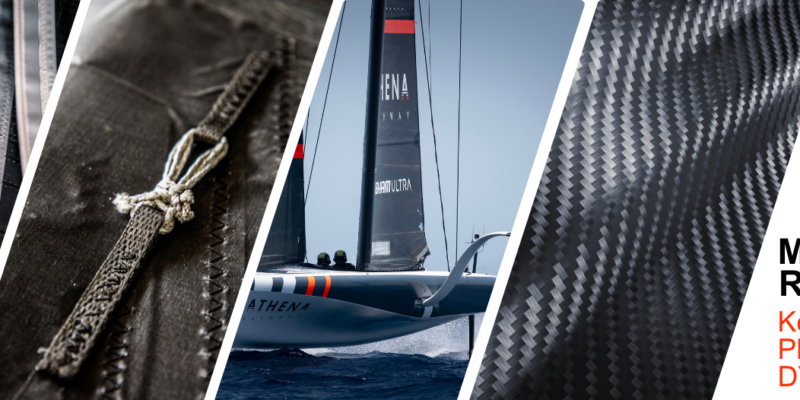
This isn’t a materials lesson. This is your students in the design room of an America’s Cup team — examining the real materials used on a race boat, making the same decisions real engineers make, then building and testing their own design under race conditions.
Carbon fibre chosen for its strength-to-weight ratio. Dyneema selected because saltwater won’t destroy it. Aluminium honeycomb because a solid sheet would never leave the dock. Every decision backed by science. Every choice a lesson in engineering thinking.

Investigating forces
This resource integrates physics and engineering principles, bringing real-world maritime challenges into the classroom, making it perfect for STEM students interested in design, technology, and physics!


